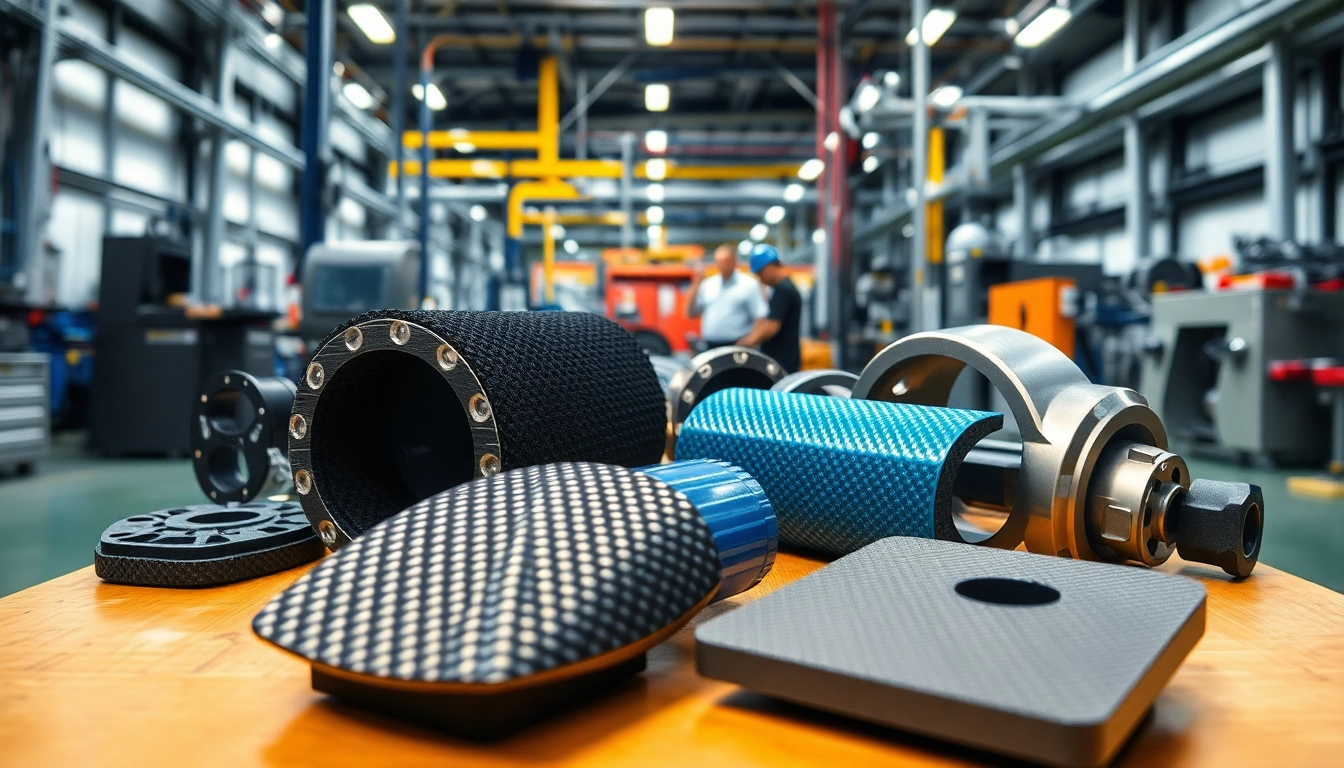
Introduction to Engineered Composites
Engineered Composites represent a revolutionary class of materials characterized by their unique ability to combine the resilience of various constituent materials. These advanced composites are increasingly recognized for their versatility and strength across numerous applications. As industries push for more sustainable and efficient material solutions, Engineered Composites are setting new standards in performance and sustainability.
What are Engineered Composites?
Engineered Composites are materials made by combining two or more distinct constituents, creating a material that exceeds the properties of its individual components. These composites typically feature a mix of fibers, such as glass, carbon, or aramid, embedded within a resin matrix. The fibers provide strength and stiffness, while the resin binds the fibers together and protects them from environmental damage. This synergistic effect enables engineered composites to achieve exceptional mechanical properties and a relatively low weight, making them ideal for a variety of applications.
Key Components of Engineered Composites
The primary components of engineered composites include:
- Fibers: Reinforcement fibers enhance the tensile strength and rigidity of the composite. Common fiber types include carbon fibers, which offer high strength-to-weight ratios, glass fibers, known for their good mechanical properties and cost-effectiveness, and aramid fibers, which provide excellent impact resistance.
- Matrix: The matrix material, usually a type of resin such as epoxy, polypropylene, or polyester, binds the fibers together, transmitting loads and protecting fibers from environmental damage.
- Fillers: Fillers may be added to enhance specific properties, such as fire resistance or thermal stability.
- Surface Coatings: Specialized coatings can be employed to protect the composite from moisture, chemicals, and UV light, further extending the lifespan of the material.
Importance in Modern Industries
Engineered Composites play a significant role in advancing modern industries by enhancing efficiency, reducing weight, and improving performance. Their contribution is particularly noticeable in sectors like aerospace, automotive, and construction, where stringent regulations for sustainability and performance standards govern material use. The ability to tailor composites to meet specific needs allows engineers to innovate solutions that traditional materials can’t provide, thus driving the future of material science.
Applications of Engineered Composites
The versatility of engineered composites lends itself to numerous applications, transcending traditional boundaries. Their ability to provide exceptional performance under challenging conditions makes them indispensable in various industries.
Aerospace and Defense Uses
In the aerospace sector, weight reduction is critical for enhancing fuel efficiency and flight performance. Engineered Composites are utilized to manufacture aircraft structures, components, and interiors. For instance, carbon fiber reinforced polymers (CFRP) are commonly employed in the wings and fuselage of modern aircraft, allowing for notable reductions in weight while maintaining structural integrity. Additionally, engineered composites are pivotal in defense applications, where high strength-to-weight ratios and resistance to environmental stressors are crucial.
Automotive Industry Implementation
The automotive sector has witnessed a significant shift toward the use of engineered composites to address fuel efficiency, safety, and design. High-performance composite materials are used in vehicle bodies, engines, and interiors to reduce weight while enhancing crashworthiness. Recent innovations include the development of composite structures that can absorb impact energy, providing safer vehicles without sacrificing aesthetics or functionality.
Medical Devices and Equipment
Engineered Composites are attaining prominence in the medical field, particularly in the manufacturing of medical devices and equipment. Their biocompatibility, customized designs, and durability make them ideal for implants, surgical instruments, and prosthetics. The ability to incorporate antibacterial properties into the composite design further enhances safety and performance in critical applications. As the medical industry continues to innovate, engineered composites are expected to play a larger role in developing new technologies.
Benefits of Using Engineered Composites
The advantages of engineered composites extend beyond initial applications, significantly impacting performance, longevity, and cost-effectiveness.
Weight Reduction and Structural Integrity
One of the most celebrated benefits of engineered composites is their unparalleled weight-to-strength ratio. This characteristic is particularly advantageous in industries like aerospace and automotive, where reducing weight directly correlates to improved efficiency and reduced fuel consumption. Additionally, engineered composites exhibit remarkable structural integrity, offering resistance to fatigue and failure, which is critical for maintaining safety and reliability in demanding applications.
Resistance to Environmental Factors
Engineered Composites are inherently resistant to moisture, chemicals, and UV radiation. This resistance is crucial in industries where materials are subjected to harsh environments, ensuring longevity and reducing maintenance costs. Their durability reduces the frequency of replacements, which can lead to significant cost savings over time.
Customization and Design Flexibility
The ability to engineer composites to specific performance criteria provides unparalleled design flexibility. Engineers can modify fiber types, matrix materials, and composite architecture to tailor the material for unique applications. This customization allows manufacturers to achieve desired performance characteristics, such as impact resistance and thermal stability, without compromising on design aesthetics.
Challenges in Engineered Composites
Despite their numerous advantages, the use of engineered composites isn’t without challenges. Addressing these issues is crucial for their widespread adoption and practical implementation.
Cost Considerations and Material Sourcing
The initial costs of engineered composites can be a barrier for many manufacturers. High-quality raw materials, coupled with specialized manufacturing processes, can inflate production costs. Additionally, sourcing quality materials can become challenging, especially with fluctuating prices and availability, impacting the overall affordability of projects. However, advances in recycling technologies and alternative materials may help mitigate these cost issues in the future.
Processing and Manufacturing Challenges
The processing of engineered composites often requires advanced techniques such as compression molding or autoclaving, which can complicate manufacturing operations. These specialized methods demand skilled personnel and can lead to longer lead times compared to traditional materials. Developing standardized manufacturing protocols and investing in workforce training can address these challenges, ensuring consistent quality and efficiency in production.
Environmental Impacts and Sustainability
While engineered composites offer numerous benefits, their environmental impact raises concerns, particularly regarding disposal and recyclability. Many composites are not readily recyclable, leaving them to contribute to waste in landfills. To address these issues, research is focused on developing bio-based resins and recycling technologies that can enhance the sustainability profile of engineered composites, promoting a circular economy.
The Future of Engineered Composites
As industries evolve and new technologies emerge, the future of engineered composites looks promising. Continuous innovations are poised to unlock unprecedented applications and performance capabilities.
Upcoming Trends and Technologies
Emerging trends in composite technology include the use of 3D printing and additive manufacturing, which promises to revolutionize how engineered composites are produced. The ability to print composites opens avenues for creating complex geometries and reducing material waste, aligning with sustainability goals. Moreover, advancements in nanotechnology are paving the way for composites with enhanced mechanical properties and functionalities, positioning engineered composites as a central focus for future research.
Research and Development Focus Areas
Research into engineered composites continues to intensify, focusing on enhancing their properties and developing more sustainable materials. Key areas of interest include improving recyclability, integrating smart technologies, and optimizing performance under extreme conditions. Collaborations between academia and industry are vital for accelerating these developments to market applications.
Industry Predictions and Market Growth
The engineered composites market is expected to grow substantially as their benefits become more recognized and technologies evolve. Industries are likely to expand their adoption of these materials, driven by the demand for lightweight and high-performance solutions. Increasing regulatory pressure for sustainable practices will further catalyze this growth, positioning engineered composites as fundamental components of future innovations.
FAQs about Engineered Composites
1. What are engineered composites made of?
Engineered composites are composed of two main components: reinforcement fibers (like carbon or glass) and a matrix material (such as resin) that binds the fibers together.
2. How do engineered composites improve performance?
Engineered composites enhance performance by combining materials to achieve superior strength-to-weight ratios, durability, and resistance to environmental factors.
3. In which industries are engineered composites used?
Engineered composites are commonly used in aerospace, automotive, medical devices, construction, and defense sectors, reflecting their versatility and robust performance.
4. Are engineered composites environmentally friendly?
While engineered composites offer many benefits, their environmental impact can be a concern. Ongoing research aims to develop recyclable composites to enhance sustainability.
5. What challenges do engineered composites face?
Challenges include high material costs, complex manufacturing processes, and environmental concerns regarding recyclability. Innovations are underway to address these issues.