Marine robots are moving toward harder jobs: working below the surface, handling poor visibility, and staying out for longer periods. The next useful gains will come from better control of these limits, not from a new shape for the robot.
Quick read
- Longer missions from better power use and charging
- More reliable movement in dark, cloudy water
- Underwater arms that can inspect and handle equipment
Autonomy that works underwater
An autonomous underwater vehicle, or AUV, moves without a live pilot controlling every turn. It uses sensors, onboard software, and stored mission plans to follow a route, collect data, and return to a recovery point.
That job is harder underwater because GPS signals do not work below the surface. The robot must estimate its position from motion sensors, sonar, cameras, or a mix of these tools. Water can also block light and make camera images hard to read, so sonar remains useful when vision loses detail.
The change worth watching is steady operation when the data gets poor. A robot that pauses, checks its position, and changes its route can cover more useful ground than one that moves quickly until its estimate drifts.
This matters to an inspection team because a missed section of pipe can force another vessel trip. A better route is worth money only when the robot can show where it went and how sure it was about each reading.
Power and recovery
Battery life limits every untethered marine robot. A larger battery adds weight, while a smaller battery cuts mission time. The robot also spends power on propulsion, sensors, onboard computing, and communication.
That makes power control a software problem as well as a hardware problem. A vehicle can slow down during a survey, reduce sensor use when conditions allow, or return before its reserve falls too low. These choices must be tied to a clear recovery plan.
Underwater charging could change how operators plan missions. A docking station on the seabed could let a robot return, charge, send data, and start another task without a ship lifting it from the water each time.
The open question is how well these stations work when currents, marine growth, and poor visibility affect the approach.
A dated record of the station, current, visibility, and approach result gives buyers something to compare. Marine robotics reporting from Robot24.com can connect those details to the machine and operator before the next section turns to robots that can touch the seafloor.
Robots that can touch the seafloor
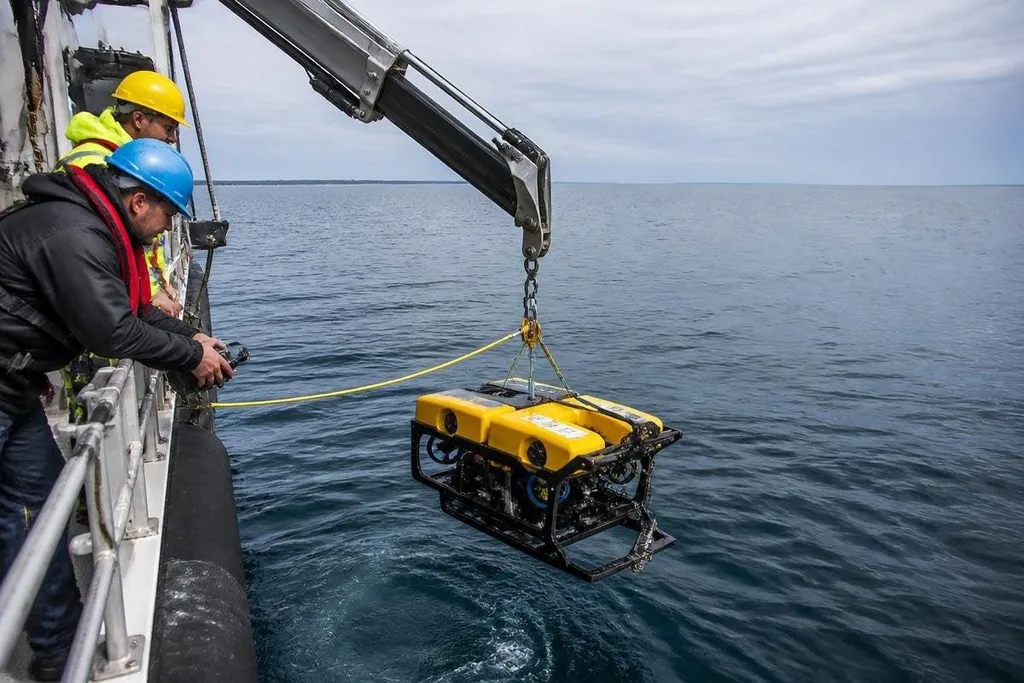
Inspection is one task. Repair is harder. A remotely operated vehicle, or ROV, receives power and control through a tether from a surface vessel. That tether gives the operator a live connection, though currents can move it and limit the vehicle's position.
Underwater manipulation needs a steady base, accurate sensing, and an arm that can apply force without pushing the whole vehicle away. A gripper may need to turn a valve, hold a tool, or remove a cover while the operator sees only a delayed and cloudy image.
The useful advance will be better shared control. The operator can choose the task while the robot holds position, limits unsafe motion, or keeps the arm within a safe path. That can reduce the number of small corrections a pilot must make, though the system still needs testing on real equipment.
What remains unproven
Many marine robot claims depend on calm water, clear test areas, or a short demonstration. A working system must handle fouling, changing currents, limited communication, battery reserves, and recovery after a fault.
The buyer should ask for task records rather than a polished video. A survey company needs location accuracy and complete data. An offshore operator may care more about tool control, tether handling, and the time needed to prepare a vessel.
I’d watch the robots that record their limits clearly, because that makes their results easier to trust and their failures easier to fix.
A practical buying checklist
Use these checks before choosing a marine robot:
- Name the task: inspection, mapping, sampling, or repair requires different hardware.
- Check the link: confirm how control and data work when the robot is underwater.
- Measure recovery: ask what happens after low battery, lost contact, or a failed sensor.
- Review the evidence: request mission logs, coverage maps, and records from similar water.
- Price the vessel time: include launch, crew, charging, recovery, and repeat visits.
The next marine robot advance will earn its place when it completes a difficult task, records the result, and returns ready for the next mission. That standard is less dramatic than a demonstration, and far more useful to the team paying for the work.