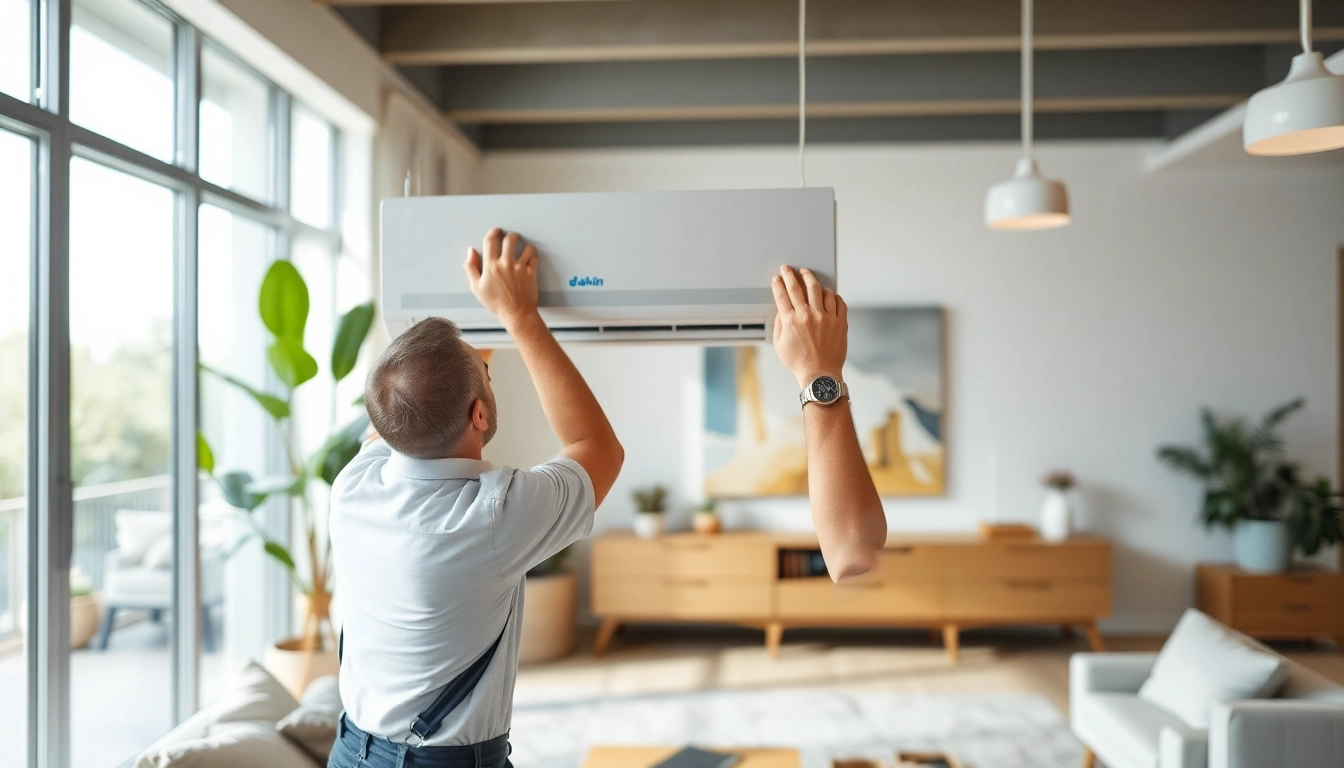
Understanding the Basics of Daikin Mini Split AC
What is a Daikin Mini Split AC?
A daikin mini split ac is an efficient heating and cooling system designed specifically for homes and commercial spaces that lack ductwork. These systems consist of two primary components: an indoor unit that distributes conditioned air into the space and an outdoor condenser unit that expels heat from the building. Unlike traditional central air systems, mini-split ACs do not require ductwork, which simplifies installation and reduces energy loss.
Key Features of Daikin Mini Split AC
Daikin mini split ACs are known for their innovative features that enhance comfort and efficiency:
- Compact Design: The indoor units are sleek and can be mounted on walls, ceilings, or floors, making them versatile for any room setting.
- Inverter Technology: This technology adjusts compressor speed according to demand, leading to higher efficiency and quieter operation.
- Multi-Zone Capability: Daikin models can heat or cool several zones independently, allowing personalized comfort in every room.
- Wi-Fi Connectivity: Many units have smart capabilities, allowing users to adjust settings remotely through their smartphones.
Benefits of Choosing Daikin Mini Split AC
Choosing a daikin mini split ac offers numerous advantages:
- Energy Efficiency: Mini split systems typically have higher SEER ratings compared to traditional AC units, which translates to lower utility bills.
- Environmental Friendliness: Reduced energy usage leads to lower greenhouse gas emissions, contributing to a smaller carbon footprint.
- Flexible Installation: Installation is less invasive than ducted systems, reducing costs and time.
- Heating and Cooling Capabilities: Many models provide both functions, allowing year-round climate control.
Factors to Consider Before Installation
Room Size and Cooling Capacity
Before purchasing a Daikin mini split AC, assess the size of the room where it will be installed. The cooling capacity is measured in BTUs, and factors like ceiling height, insulation, and window size can affect the required capacity. A unit that’s too small will struggle to cool the space, while one that’s too large might lead to inefficiencies and fluctuating temperatures.
Energy Efficiency Ratings
Energy efficiency is a critical consideration. Look for units with high SEER (Seasonal Energy Efficiency Ratio) ratings, as they use less energy to cool the same amount of space. Energy-efficient systems may cost more upfront but will save you money over time through reduced energy bills.
Installation Requirements and Regulations
Before installation, check local building codes and regulations regarding HVAC systems. Some regions may have specific requirements for refrigerant types or installation practices. Hiring a professional installer familiar with local regulations will ensure compliance and optimal performance.
Step-by-Step Installation Process
Preparing the Space for Installation
Preparation is key to a successful installation. The location for both the indoor and outdoor units should be easily accessible for maintenance. Clear any obstructions and ensure the area has adequate electrical supplies. Mounting brackets should be installed on a stable wall for the indoor unit, while the outdoor unit requires a level surface and good airflow.
Wiring and Mounting the Indoor Unit
Once the indoor unit location is prepared, run the necessary wiring and refrigerant lines through the wall. The indoor unit should be securely mounted according to the manufacturer’s specifications. Ensure that the drainage line for condensation is properly installed to prevent leaks.
Setting Up the Outdoor Unit
The outdoor unit should be securely positioned, ideally elevated to avoid ground moisture and ensure good airflow. Connect the refrigerant lines, power supply, and control wiring between the indoor and outdoor units. After everything is connected, vacuum the lines to remove any air and moisture, then charge the system with refrigerant.
Maintenance Tips for Optimal Performance
Regular Cleaning and Filters
To maintain peak performance, clean or replace filters regularly—usually every three months. Dust and debris accumulate in filters, hindering airflow and reducing efficiency. Additionally, the coils and outdoor unit should be cleaned at least once a year to prevent obstructions.
Annual Professional Check-ups
Scheduling annual maintenance with a qualified technician can prolong the life of the system. A professional can check refrigerant levels, test electrical connections, and ensure components like condensate drains are functioning properly to prevent issues.
Troubleshooting Common Issues
Many common issues can arise with Daikin mini split ACs, including insufficient cooling or heating, unusual noises, and refrigerant leaks. If the unit is not cooling efficiently, check the thermostat settings, verify the filters are clean, and ensure there are no obstructions around the outdoor unit. For issues involving refrigerant levels or electrical connections, consult a professional.
Frequently Asked Questions about Daikin Mini Split AC
How efficient is the Daikin mini split AC?
Daikin mini split ACs are known for their high energy efficiency ratings, typically with SEER ratings above 20, leading to reduced energy consumption and lower utility bills.
Can I install the Daikin mini split AC myself?
While some individuals opt for DIY installations, it's recommended to hire a professional to ensure compliance with local codes and proper functionality.
What is the average lifespan of a Daikin mini split AC?
With proper maintenance, Daikin mini split AC systems can last between 15 to 20 years, which is comparable to traditional HVAC systems.
How do I choose the right size Daikin mini split AC?
Choosing the right size depends on the room's square footage and heat load calculations. Consulting a professional can help determine the appropriate BTU capacity for your space.
Are Daikin mini split ACs noisy during operation?
Daikin mini split ACs are generally quieter than traditional systems due to their inverter technology, making them an excellent choice for residential spaces.