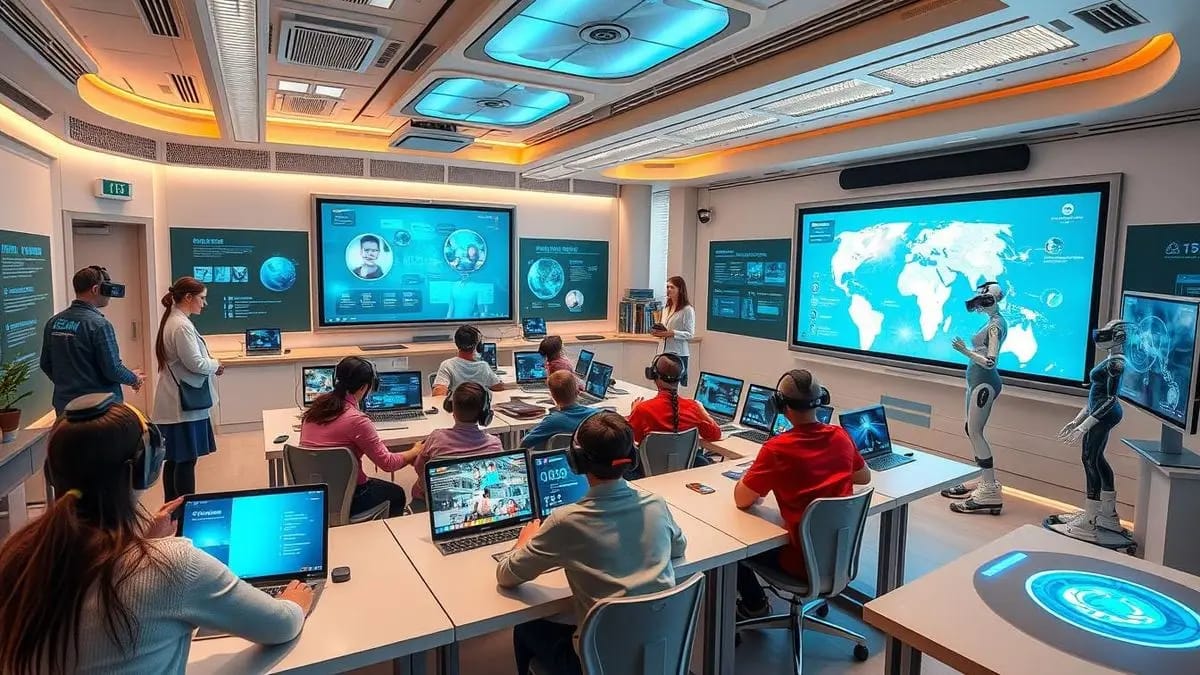
The Growing Importance of Gamification in Education
Gamification in education has moved from an experimental teaching approach to a research-backed instructional strategy adopted worldwide. Educators, institutions, and digital learning providers increasingly rely on Gamification in education to improve learning outcomes, increase motivation, and sustain student engagement. Academic research across psychology, neuroscience, and pedagogy confirms that game-based elements enhance how learners process information and remain committed to their educational goals.
Rather than relying solely on traditional lectures and assessments, gamification in education introduces structured challenges, progress systems, and feedback loops that align with how the human brain learns best. This shift reflects a growing recognition that engagement is not optional but essential for meaningful learning.
Scientific Foundations of Gamification in Education
Research shows that learning improves when students are emotionally invested. Gamification in education leverages established cognitive and behavioral theories to create this investment. Studies consistently demonstrate that learners exposed to gamified environments show higher attention, better retention, and improved performance.
Cognitive Psychology and Learning Retention
Cognitive psychology research highlights that active participation strengthens memory formation. Gamification in education promotes active learning through quizzes, challenges, and interactive problem-solving. These activities stimulate multiple areas of the brain, improving encoding and recall of information.
Research indicates that repetition combined with immediate feedback, a core component of gamification in education, significantly improves long-term retention. When learners receive instant responses to their actions, they can correct misunderstandings before they become ingrained.
Behavioral Science and Motivation
Behavioral science supports the motivational impact of gamification in education. Reward systems such as points, achievements, and progress indicators reinforce positive behaviors. Studies show that learners are more likely to complete tasks and persist through difficulties when progress is visible and rewarded.
Gamification in education also supports goal-setting theory. Clear objectives and incremental milestones help learners maintain focus and motivation, leading to higher completion rates and deeper engagement.
Research Evidence on Student Engagement
Numerous studies confirm that gamification in education increases student engagement across age groups and disciplines. Engagement is measured through participation, time on task, and emotional involvement, all of which improve in gamified learning environments.
Increased Participation Rates
Research conducted in both K-12 and higher education settings shows that gamification in education significantly increases classroom participation. Students are more willing to answer questions, collaborate with peers, and engage in discussions when game elements are present.
Participation increases because gamification in education reduces the fear of failure. Low-risk challenges and multiple attempts encourage students to try without anxiety, fostering a more inclusive learning environment.
Improved Attention and Focus
Attention span is a major concern in modern education. Studies reveal that gamification in education helps maintain focus by breaking lessons into manageable segments and incorporating interactive elements. Timed challenges and progress tracking keep learners mentally engaged and reduce distractions.
These findings are particularly relevant in digital and remote learning environments, where maintaining attention is more challenging.
Academic Performance Improvements Supported by Data
Beyond engagement, research confirms that gamification in education positively impacts academic performance. Test scores, assignment completion, and skill mastery all show measurable improvement when gamified strategies are applied correctly.
Higher Assessment Scores
Multiple peer-reviewed studies report higher assessment scores among students exposed to gamification in education. These improvements are attributed to increased practice, better feedback, and enhanced motivation.
Gamified quizzes and simulations allow students to apply knowledge repeatedly in varied contexts, reinforcing understanding and improving exam readiness.
Enhanced Skill Development
Gamification in education supports the development of both cognitive and non-cognitive skills. Research highlights improvements in problem-solving, critical thinking, collaboration, and self-regulation.
By framing learning as a series of challenges, gamification in education encourages strategic thinking and adaptability, skills essential for academic and professional success.
Neuroscience Insights into Gamification in Education
Neuroscience research provides compelling evidence for the effectiveness of gamification in education. Brain imaging studies reveal that game-based learning activates reward pathways associated with motivation and pleasure.
Dopamine and Learning Motivation
Dopamine plays a key role in motivation and learning. Gamification in education triggers dopamine release through achievement recognition and progress indicators. This neurological response reinforces learning behaviors and increases the likelihood of sustained engagement.
Studies show that learners are more motivated to continue tasks when they anticipate rewards, even symbolic ones, highlighting the neurological basis for gamification in education.
Emotional Engagement and Memory Formation
Emotionally charged experiences are more memorable. Gamification in education introduces excitement, curiosity, and satisfaction into the learning process, strengthening emotional connections to content.
Neuroscientific evidence confirms that emotionally engaged learners form stronger neural connections, leading to improved recall and application of knowledge.
Benefits of Gamification in Education for Diverse Learners
Research emphasizes that gamification in education benefits a wide range of learners, including those with different learning styles, abilities, and backgrounds.
Supporting Visual and Kinesthetic Learners
Gamification in education often incorporates visual progress indicators, interactive simulations, and hands-on challenges. These elements support visual and kinesthetic learners who may struggle with text-heavy instruction.
Studies show that multimodal learning environments increase comprehension and reduce cognitive overload.
Inclusivity and Accessibility
Gamification in education promotes inclusivity by offering multiple pathways to success. Research indicates that students with learning differences benefit from flexible pacing, repeated practice, and immediate feedback.
This adaptability allows educators to meet diverse needs without compromising academic standards.
Long-Term Learning Outcomes and Persistence
One of the most compelling research-backed benefits of gamification in education is its impact on long-term learning and persistence.
Increased Course Completion Rates
Studies in online and blended learning environments show that gamification in education significantly increases course completion rates. Learners are more likely to finish programs when progress is visible and milestones are celebrated.
This is especially relevant for adult learners balancing education with work and personal responsibilities.
Lifelong Learning Motivation
Gamification in education fosters a growth mindset by emphasizing progress over perfection. Research suggests that learners exposed to gamified environments develop greater confidence and willingness to pursue continuous learning.
This long-term motivational impact extends beyond formal education into professional development and skill acquisition.
Institutional Benefits Supported by Research
Research also highlights the benefits of gamification in education for institutions and educators.
Improved Teaching Effectiveness
Gamification in education provides educators with real-time data on learner performance and engagement. Studies show that this data-driven insight improves instructional decision-making and curriculum design.
Educators can identify gaps, personalize instruction, and adjust pacing more effectively.
Enhanced Student Satisfaction
Student satisfaction surveys consistently show higher ratings for courses that incorporate gamification in education. Learners report feeling more motivated, supported, and connected to the learning process.
Higher satisfaction contributes to better retention and institutional reputation.
Addressing Common Research-Based Concerns
While the benefits are well-documented, research also identifies conditions for successful implementation of gamification in education.
Avoiding Superficial Gamification
Studies caution against superficial use of game elements without clear learning objectives. Gamification in education must be pedagogically grounded to be effective.
Research supports aligning game mechanics with educational outcomes to ensure meaningful engagement.
Balancing Competition and Collaboration
Excessive competition can negatively impact some learners. Research recommends balancing competitive elements with collaborative activities to maintain a supportive learning environment.
Gamification in education works best when it fosters cooperation alongside healthy challenge.
Future Research and Emerging Evidence
Ongoing research continues to expand understanding of gamification in education. Emerging studies explore the integration of artificial intelligence, adaptive learning, and immersive technologies.
Early findings suggest that AI-driven gamification in education further enhances personalization and learning efficiency. These innovations promise even stronger research-backed outcomes in the coming years.
Conclusion
Research across multiple disciplines confirms that gamification in education delivers measurable benefits for learners, educators, and institutions. From increased engagement and motivation to improved academic performance and long-term learning persistence, the evidence is clear and compelling.
When thoughtfully designed and aligned with educational goals, gamification in education transforms learning into an engaging, effective, and research-supported experience. As education continues to evolve, the growing body of research ensures that gamification in education remains a trusted and powerful strategy for achieving meaningful learning outcomes.