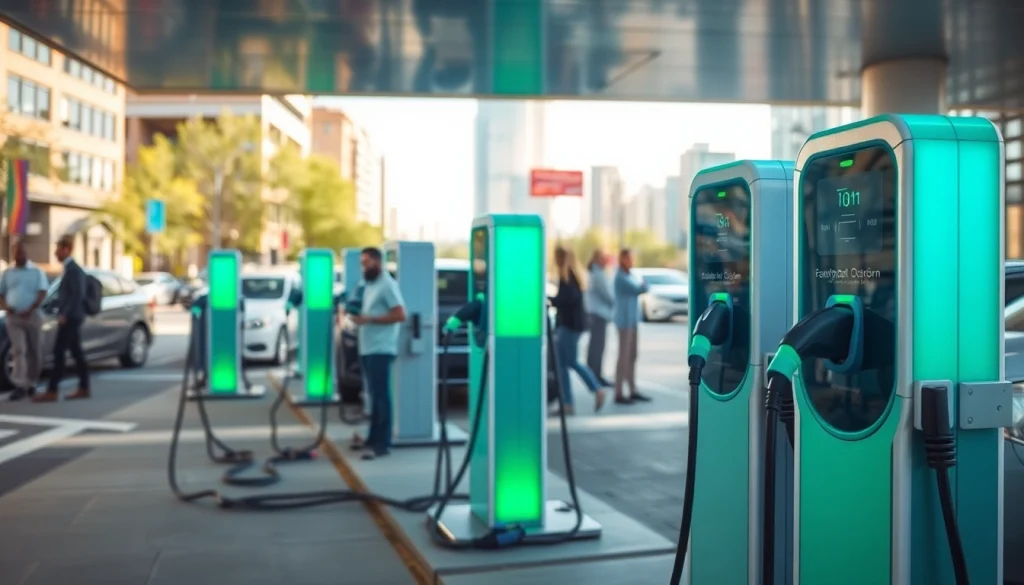
The Current Landscape of EV Charging News
The rapid evolution of electric vehicle (EV) charging infrastructure is at the forefront of the green energy revolution. As governments, businesses, and consumers increasingly recognize the need for sustainable transportation solutions, the landscape of EV charging is transforming. From the expansion of charging networks to advancements in charging technology, the realm of EV charging news reflects a dynamic environment filled with innovation and challenges.
Overview of EV Charging Infrastructure Expansion
In recent years, the expansion of EV charging infrastructure has been a top priority for several stakeholders across the automotive and energy sectors. Governments worldwide are investing heavily to build comprehensive charging networks that cater to the growing number of electric vehicles on the road. This expansion includes both public charging stations and residential charging points.
For instance, various projects are underway to significantly increase the number of ultra-fast charging stations that can power an EV in under 30 minutes. These installations aim to ease the transition from traditional fuel consumption to electric, providing drivers with the confidence that charging is convenient and accessible. Furthermore, collaborations between private firms and local governments are fostering more robust infrastructure development, aiming to provide coverage in urban, suburban, and rural areas alike.
Consumer Sentiments Toward EV Charging Options
Despite the advancements in charging infrastructure, consumer sentiment reflects a mix of enthusiasm and skepticism. A recent poll indicated that while the awareness of EVs is increasing, many potential buyers express concerns regarding the availability of charging stations and the time it takes to refuel. This phenomenon, commonly referred to as range anxiety, presents a psychological barrier to EV adoption.
To combat these concerns, it’s crucial to not only expand the charging network but also to enhance the charging experience. The ease of finding and using charging stations can significantly influence consumer choices. As more drivers experience hassle-free charging, it’s likely that consumer attitudes will begin to shift positively towards electric vehicles.
Technological Advances in Charging Stations
Advancements in technology are revolutionizing how EV charging stations function. Innovations such as smart chargers and wireless charging offer exciting possibilities that improve the user experience. Smart chargers can optimize charging times based on electricity costs, while wireless charging reduces the hassle of connecting cables entirely.
Moreover, integrating artificial intelligence and machine learning into charging systems can facilitate real-time data analytics, giving users updates on charging performance and station availability. These technologies are not only increasing convenience but also driving the efficiency of energy consumption in charging stations.
Key Challenges Facing EV Charging Adoption
While the IMOVEMENT toward electric vehicle adoption appears promising, several challenges remain that need to be addressed to ensure a smooth transition to this new technology. Identifying these obstacles is essential for stakeholders seeking to enhance EV charging infrastructure and bolster consumer confidence.
Range Anxiety: Myths vs. Facts
Range anxiety continues to be a pivotal concern that hampers the widespread acceptance of EVs. Many prospective customers worry that they may not find a charging station when needed or that existing stations may be occupied. However, statistics show that most journeys are well within the capacity of modern electric vehicles. In many cases, the average daily driving distance aligns comfortably with what EVs can achieve on a single charge.
To quell these fears, educational campaigns and data transparency regarding charging availability can play a crucial role. Showing real-world data usage patterns and the actual range of various EV models can help dispel myths and empower consumers to make informed decisions.
Understanding Charger Availability and Accessibility
The distribution of charging stations significantly impacts user adoption rates. Areas with dense charging networks tend to encourage higher EV uptake. Thus, understanding the geographical distribution of chargers and identifying underserved regions is critical for effective infrastructure planning.
Furthermore, policymakers must address accessibility issues, ensuring that charging options are available to all communities, including those in underrepresented or rural areas. Installing charging stations in diverse locations, such as workplaces, shopping centers, and public facilities, can further enhance their visibility and usability to the general public.
Addressing Economic Barriers to EV Charging
Economic factors also present significant barriers to the expansion of EV charging. The initial investment costs for installing charging infrastructure can be high, particularly in less populated regions where the return on investment may not be immediately clear. Additionally, the cost of EVs is still a concern for many consumers compared to traditional vehicles.
To alleviate these economic challenges, collaboration between public and private sectors is essential. Providing incentives such as grants, tax breaks, or subsidies for charging station installations can motivate investment in broader and more widely accepted EV charging networks.
Innovative Solutions in EV Charging Technology
The future of EV charging is not merely about increasing the number of stations but also about enhancing efficiency and user experience through innovative technology solutions. The following advancements are paving the way for a more sustainable and user-friendly charging ecosystem.
Fast Charging Innovations and Their Impact
Fast charging technology is advancing rapidly, with numerous initiatives underway to enhance charging speeds and efficiencies. Chargers with significantly higher wattage capacities are beginning to emerge, allowing for reduced charging time to mere minutes, paralleling the conventional fueling experience.
The implications of fast charging technologies can be transformative, reducing the time and hassle associated with charging. As these innovations become widely adopted, the practicality of owning an electric vehicle will increase, enticing more consumers to transition.
Smart Charging: The Future of Energy Management
Smart charging networks are revolutionizing how electricity is consumed and distributed. By using real-time data to manage charging schedules, these systems can optimize energy usage, reducing peak demand loads. Furthermore, they can help balance electricity supply and demand effectively, making use of energy at optimal costs.
Integration with home energy management systems allows consumers to charge their EVs when electricity costs are lowest and even interface with solar energy systems. This interconnected approach not only reduces costs for consumers but also supports the broader integration of renewable energy into the grid.
Integration of Renewable Energy in Charging Stations
Charging stations powered by renewable energy sources signal a significant step towards sustainable transportation. By integrating solar panels and on-site wind turbines, charging stations can produce their energy, contributing to renewable energy goals while decreasing dependency on fossil fuels.
Moreover, charging stations can be designed to provide energy back to the grid during peak hours, promoting resilience and sustainability within the energy ecosystem. This bidirectional flow of energy recognizes the charging unit as not just a consumer of power but as a critical player in an energy-efficient future.
Regulatory and Policy Trends Affecting EV Charging News
Sustainable policies shape the growth of EV charging infrastructure. Local, state, and federal initiatives profoundly impact the direction of EV adoption and charging solutions. Understanding these policies is essential for stakeholders aiming to thrive in this evolving landscape.
Government Incentives and Support for EV Adoption
Governments across the globe are increasingly mandating policies that support electric vehicle usage and charging infrastructure development. These incentives typically include tax credits for EV buyers, subsidies for charging station installations, and grants for research and development in charging technology.
Such support enhances the attractiveness of electric vehicles for consumers and makes it economically viable for businesses to invest in necessary charging infrastructure. The harmonization of policies across different jurisdictions can significantly boost the growth of comprehensive EV networks.
Impact of Local Legislation on Charging Infrastructure
Local regulations have a direct impact on the installation rates and operational efficiencies of charging stations. Policies encouraging the integration of EV charging stations within building codes have made it a requirement for new constructions, thus facilitating infrastructure expansion.
Moreover, regulations that prioritize the placement of charging stations in accessible locations, such as workplaces and multi-family housing, directly contribute to increasing public EV usage. Stakeholders must stay informed of these evolving legislative environments to adapt their strategies and remain compliant.
Collaborations Between Public and Private Sectors
The partnership between public and private sectors can catalyze the development and deployment of efficient charging infrastructure. By sharing resources, knowledge, and investment, these collaborations can reduce redundancy and maximize impact.
Public-private partnerships have proven effective in establishing large-scale charging networks that provide reliable and convenient services to EV users. Additionally, these collaborations can leverage funding opportunities and foster innovation, driving forward the advancement of both technology and infrastructure.
Future Predictions in EV Charging News
The landscape of electric vehicle charging continues to evolve rapidly, and several key trends are emerging that will shape its future. Understanding these predictions can help stakeholders make informed decisions and adapt strategies accordingly.
The Role of AI and Data in EV Charging Solutions
Artificial intelligence is poised to play a significant role in optimizing EV charging solutions. By analyzing data on user behavior, charging behavior, peak usage times, and infrastructure effectiveness, AI can create tailored solutions for every driver. This could include personalized charging suggestions that align with the user’s routine and energy availability.
Further, predictive analytics can help anticipate infrastructure needs by analyzing historical usage patterns, thus allowing for proactive developments instead of reactive measures. AI will be integral in creating smarter, more efficient EV networks.
Trends in Consumer Behavior Toward EVs and Charging
Consumer behavior continues to shift towards embracing electric vehicles as more customers prioritize sustainability. A growing awareness of climate change and the environmental impact of traditional fuels is leading to increased interest in electric solutions.
Moreover, as families and individuals identify the long-term financial savings associated with EV ownership, coupled with falling battery costs, there is a notable increase in the expectation for robust EV charging networks to support their choices. Tailoring marketing strategies based on these shifting consumer values will be essential for companies aiming to penetrate this rising market effectively.
Forecasting the Growth of EV Charging Networks
The next decade is expected to witness exponential growth in EV charging networks. With committed investments and continued technological innovations, the landscape of charging infrastructure will transform dramatically.
Projections suggest that the number of charging stations will grow substantially, supported by both market demand and regulatory frameworks. This growth will not only enhance accessibility but will also create a robust ecosystem that supports the long-term viability of electric vehicles.
In conclusion, the future of EV charging is promising, promising significant improvements in technology, infrastructure, and consumer acceptance. Stakeholders must remain adaptive, informed, and engaged in ongoing discussions to ensure they are contributing to the successful transition toward a sustainable transport future.